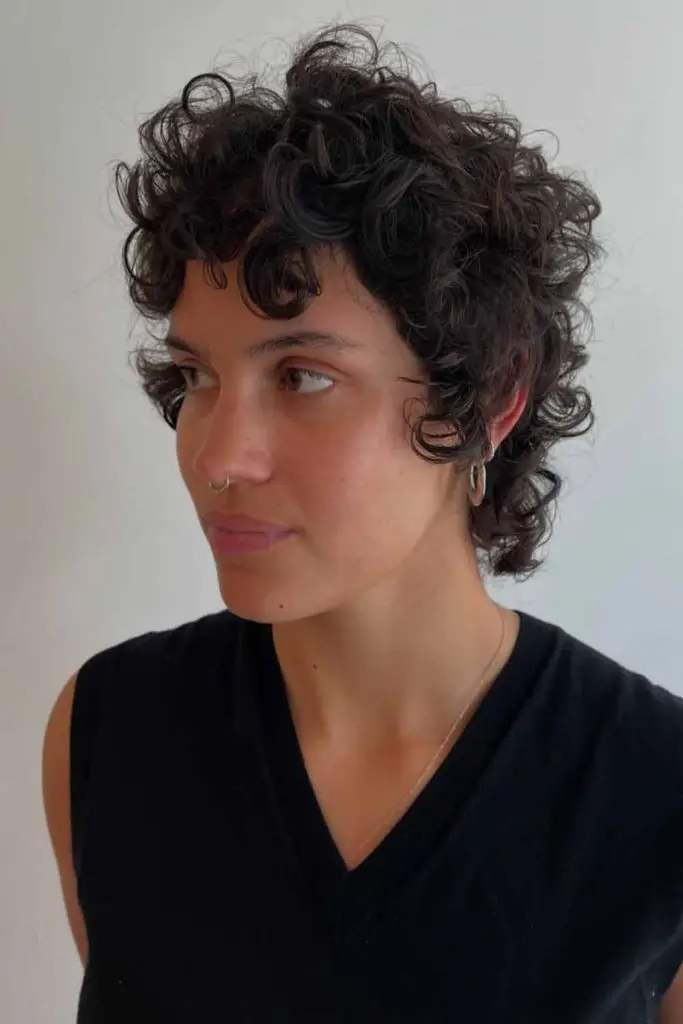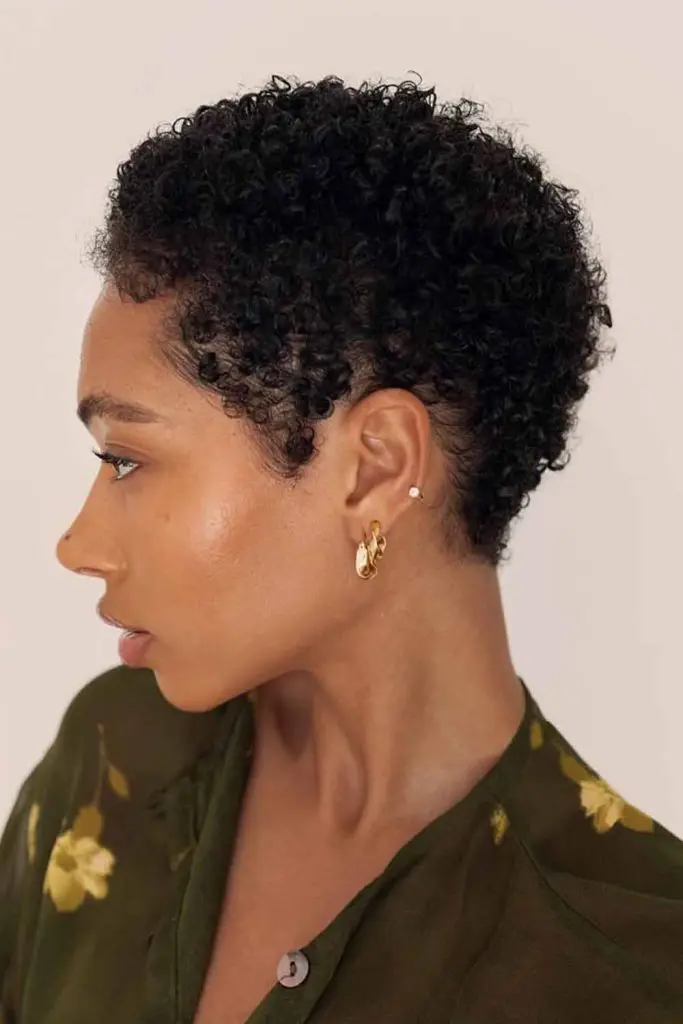
Short curly pixie hairstyles combine two things many women want from a haircut: personality and practicality.
A good curly pixie can showcase natural texture, bring attention to your eyes and cheekbones, reduce the weight of longer hair and create a completely different silhouette without requiring complicated everyday styling. But there isn’t just one type of curly pixie.
Some are extremely short and closely tapered. Others leave considerably more length through the crown so curls can form naturally. You can introduce bangs, asymmetry, volume, colour, an undercut or a softer layered finish. The right choice depends on much more than finding a photograph you like.
Your natural curl pattern, hair density, face shape, lifestyle and willingness to maintain a short haircut should all influence the decision.
This Marrie guide brings those considerations together. Below you’ll find 25 short curly pixie hairstyle ideas, followed by guidance on choosing a pixie for your face shape and hair type, maintaining your haircut, styling it at home and preparing for your next salon appointment.
What Is a Curly Pixie Cut?
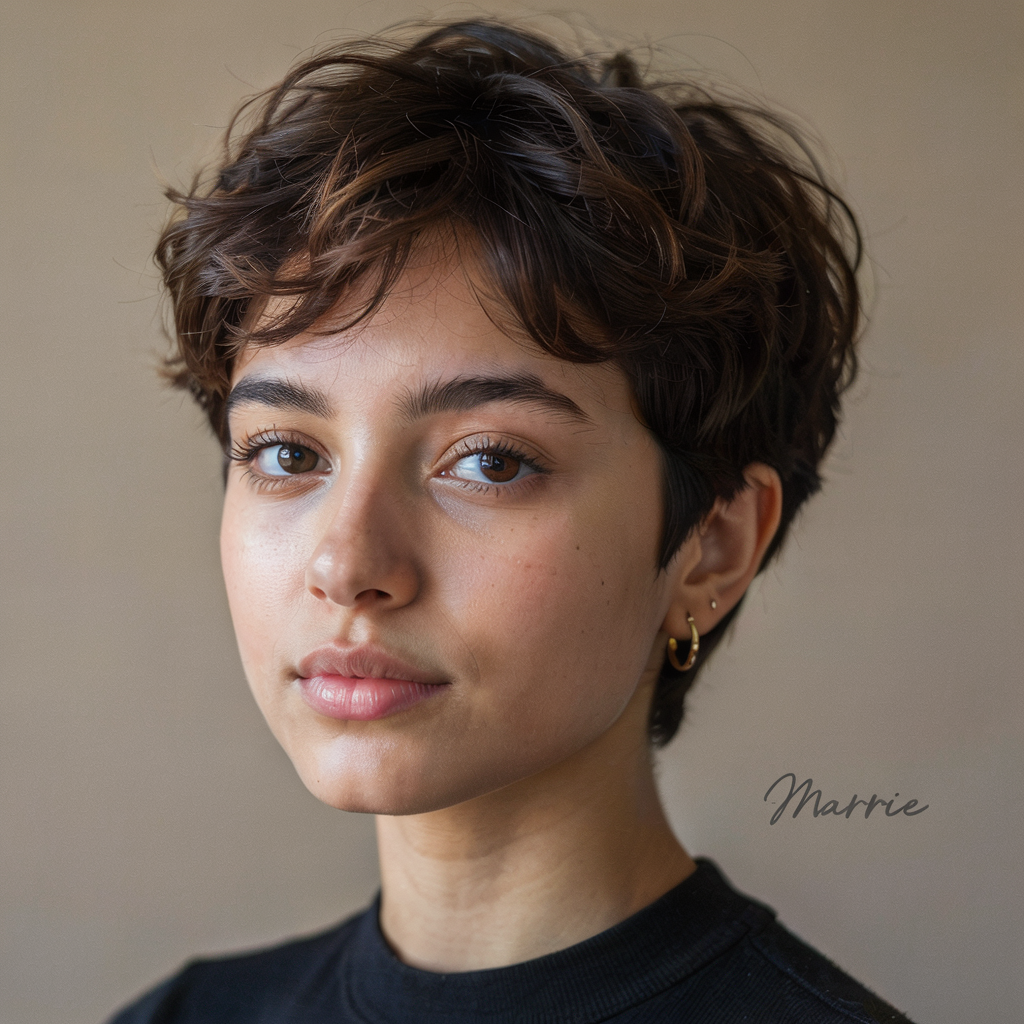
A curly pixie is a short haircut designed to work with curly, wavy or coily texture.
Traditionally, pixie cuts are shorter around the sides and back, with slightly more length through the top. However, modern curly pixies vary considerably.
You might see:
- closely cropped sides with long curls on top;
- soft layered pixies with natural movement;
- curly bangs;
- tapered cuts;
- undercut pixies;
- voluminous crowns;
- asymmetric fringes;
- very short natural coils;
- longer, grown-out pixies.
The important difference between a good curly pixie and simply cutting curly hair very short is shape.
Curly hair behaves differently from straight hair. Curl shrinkage, density and natural growth patterns all affect where the hair sits once it has dried.
For that reason, your stylist should consider your natural texture rather than treating the haircut as a straight pixie that happens to be curled afterwards.
Why Are Short Curly Pixie Hairstyles So Popular?
A curly pixie can feel dramatic when you have been accustomed to longer hair, but there are good reasons the style continues to return.
Natural texture becomes part of the haircut
Instead of continually straightening or suppressing curls, a pixie can allow them to become the focal point.
Individual curls can create movement and dimension that naturally give a short haircut character.
Less hair doesn’t necessarily mean less style
A pixie may be short, but small styling changes can alter its appearance considerably.
Push the curls forward for a fringe, lift the crown for volume, create a side part, define individual curls or smooth everything down for a sleeker finish.
It can emphasise facial features
Removing length from around the face exposes areas that longer hair can sometimes hide.
Eyes, eyebrows, cheekbones, jawline and earrings all become more noticeable.
Shorter washing and drying routines
There is simply less hair to wash, condition and dry.
That doesn’t make a curly pixie maintenance-free, but everyday care can become significantly quicker.
It works across different curl patterns
Loose waves, defined ringlets and tight coils can all work with pixie-inspired shapes.
The haircut just needs to be adapted to the texture.
25 Short Curly Pixie Hairstyles to Consider
1. Classic Curly Pixie Cut


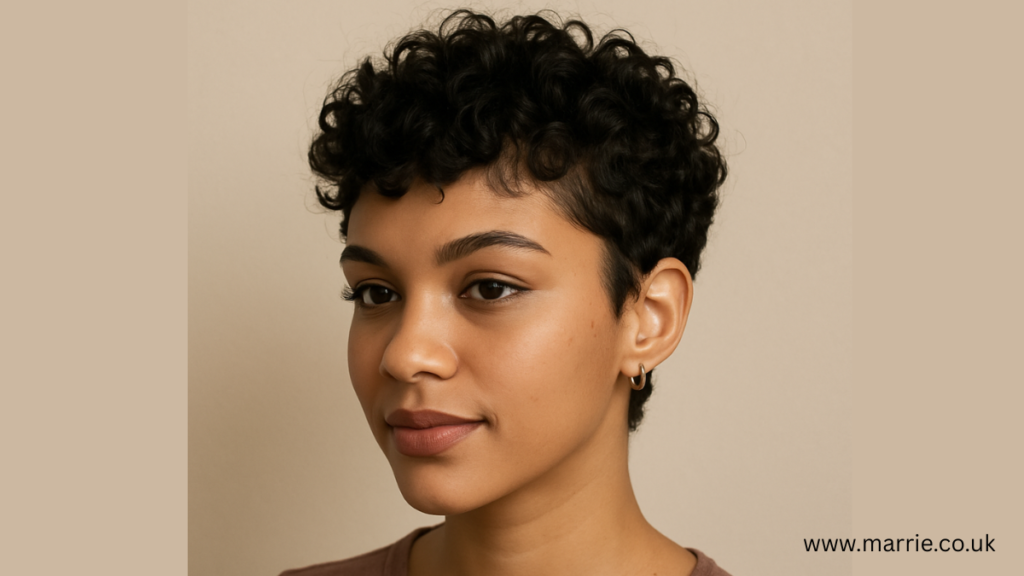
The classic curly pixie is one of the easiest places to begin.
The sides and back remain relatively short while enough length is retained through the crown for curls to form.
Rather than looking heavily sculpted, the aim is to create a balanced silhouette that allows the texture to do much of the styling.
Best for: Women trying a pixie for the first time.
Styling idea: Work a small amount of lightweight curl cream through damp hair and allow the natural curl pattern to develop.
2. Tapered Pixie With Defined Curls
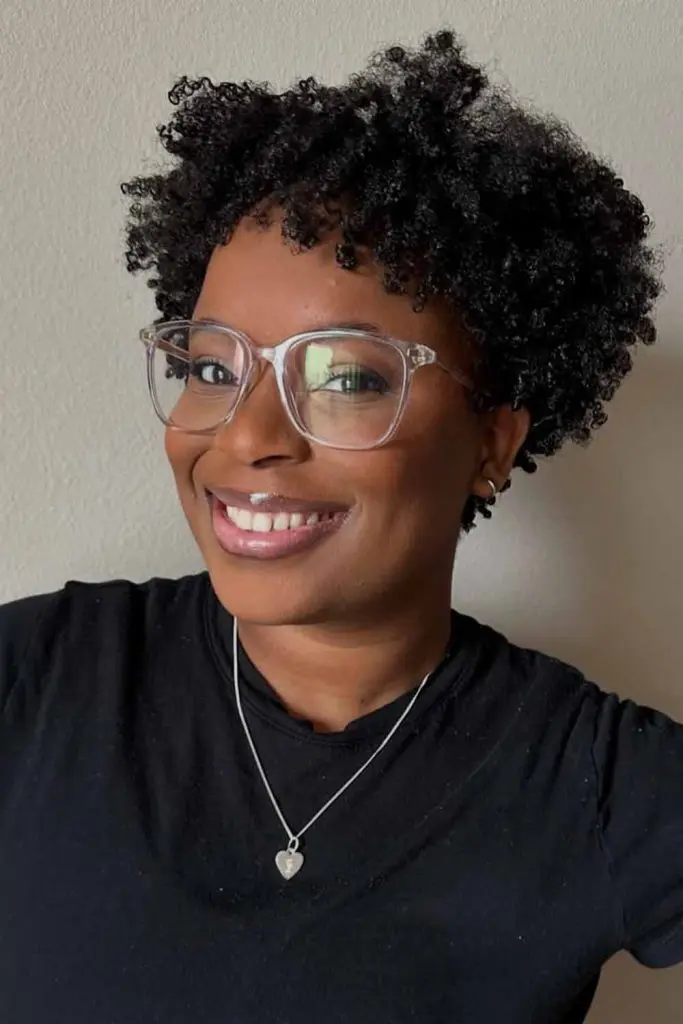
A tapered pixie gradually becomes shorter around the sides and nape while maintaining more curl through the top.
The contrast creates a clean shape without sacrificing texture.
This is particularly useful if your curls become bulky around the sides because the taper removes some of that weight.
Best for: Medium to tight curl patterns.
Ask your stylist for: A gradual taper rather than an abrupt transition between the crown and sides.
3. Curly Pixie With Tousled Bangs
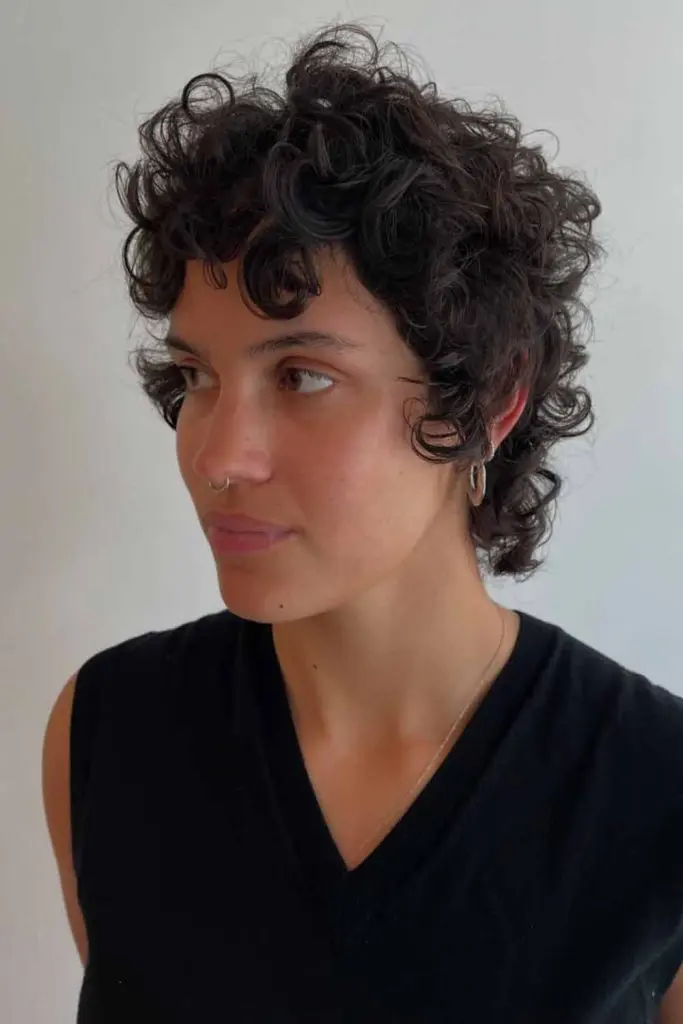
Not every pixie needs to expose the entire forehead.
Leaving extra length toward the front allows several curls to fall naturally across it, producing a softer, slightly undone finish.
Tousled bangs are particularly attractive when you don’t want your short haircut to feel overly structured.
Best for: Wavy and loosely curly textures.
Styling tip: Avoid trying to make every curl identical. Slight irregularity is what gives this style its relaxed appearance.
4. Ultra-Short Pixie With Natural Coils
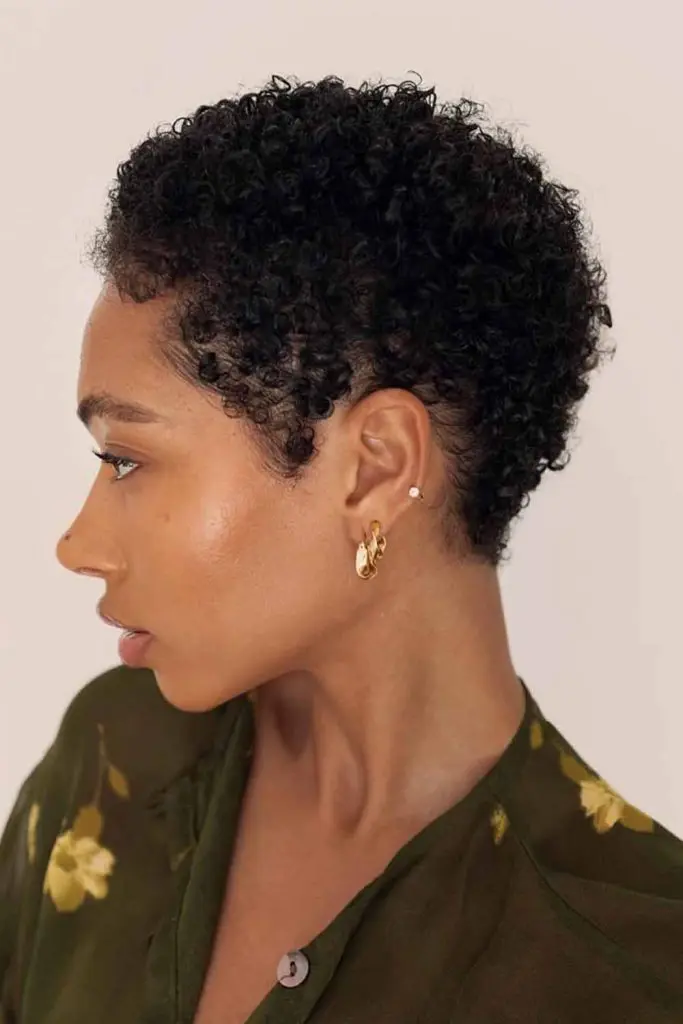
For women comfortable going very short, natural coils can create an exceptionally striking pixie.
The hair remains closely cropped while its natural texture creates definition across the head.
This style eliminates much of the daily manipulation associated with longer coily hair, although moisture remains important.
Best for: Naturally coily hair and anyone wanting a minimalist routine.
5. High-Top Curly Pixie
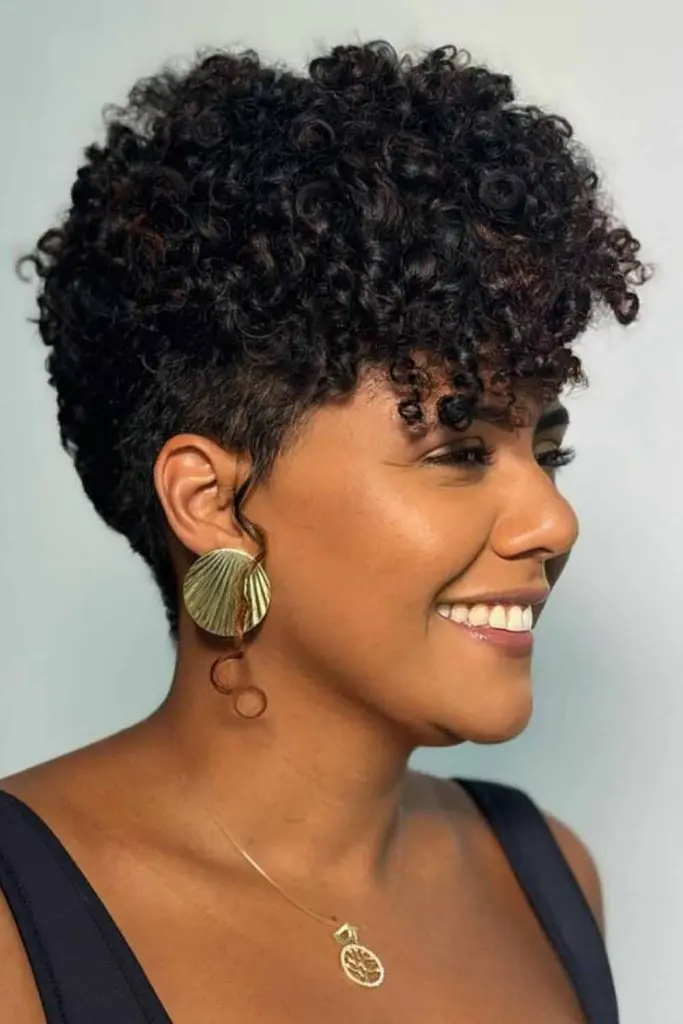
The high-top pixie keeps considerably more volume through the crown while the sides remain controlled.
It creates height, drama and a strong silhouette.
The contrast can also visually lengthen the face.
Best for: Thick curly or coily hair.
Particularly flattering on: Rounder face shapes when extra height is desired.
6. Curly Pixie With Side-Swept Fringe
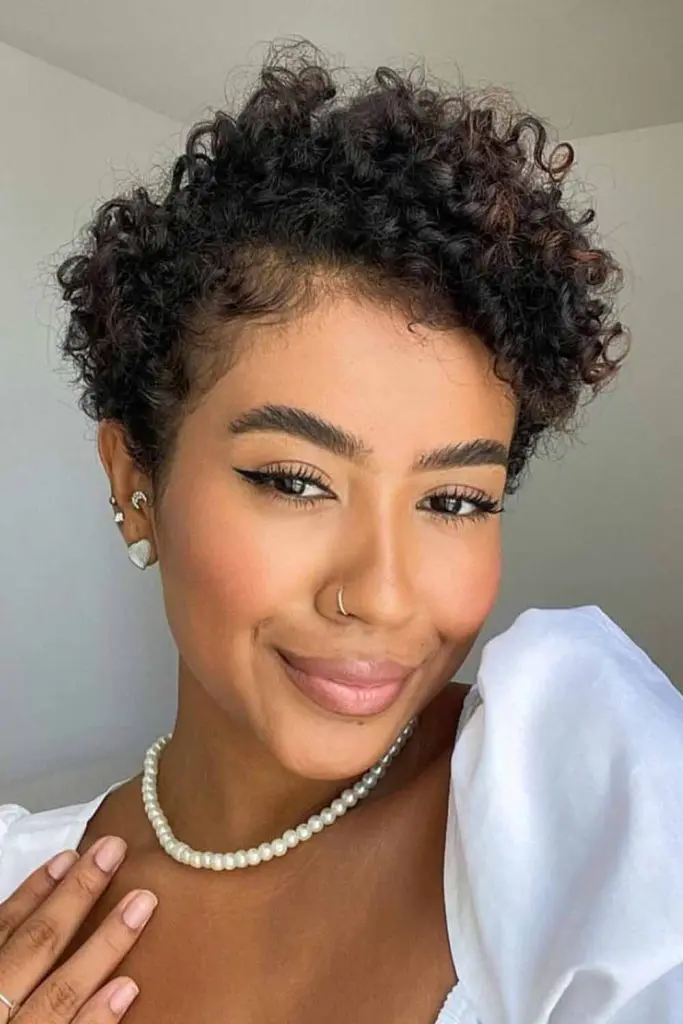
A longer side fringe provides versatility without requiring much additional hair length.
The curls can sweep across the forehead and blend into the crown.
This also makes the transition into a pixie feel less dramatic because some face-framing length remains.
Best for: Women who enjoy fringes or softer facial framing.
7. Voluminous Layered Curly Pixie
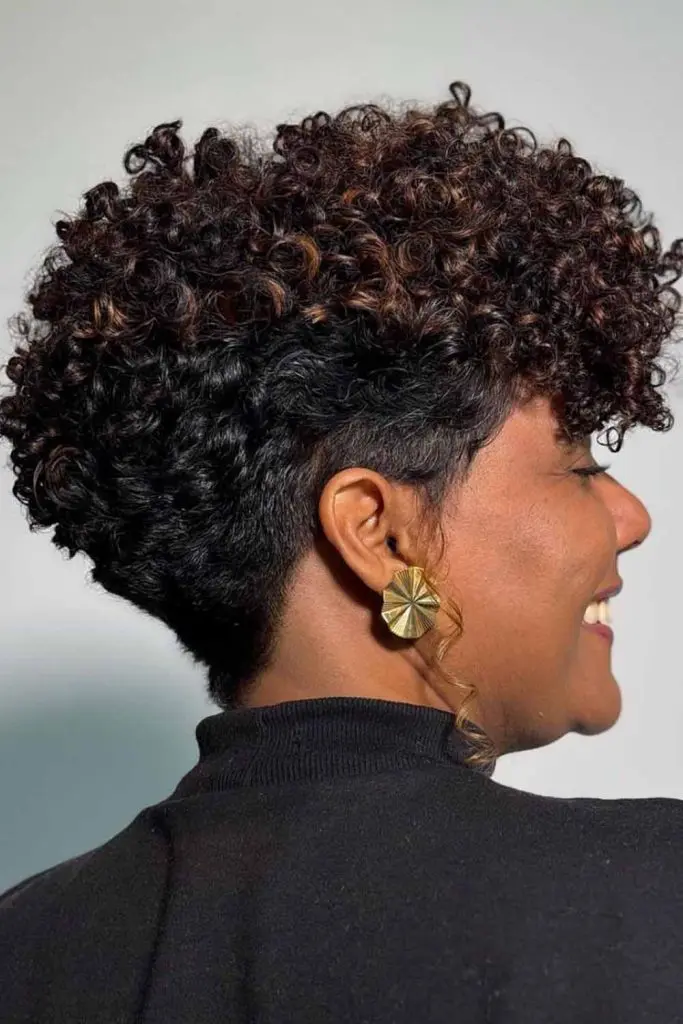
Layers are extremely useful in curly hair.
Instead of allowing the haircut to become triangular or excessively heavy, strategically positioned layers distribute volume and encourage individual curls to move.
The result is a fuller but more controlled pixie.
Best for: Thick hair and naturally springy curls.
8. Curly Pixie With Deep Side Part
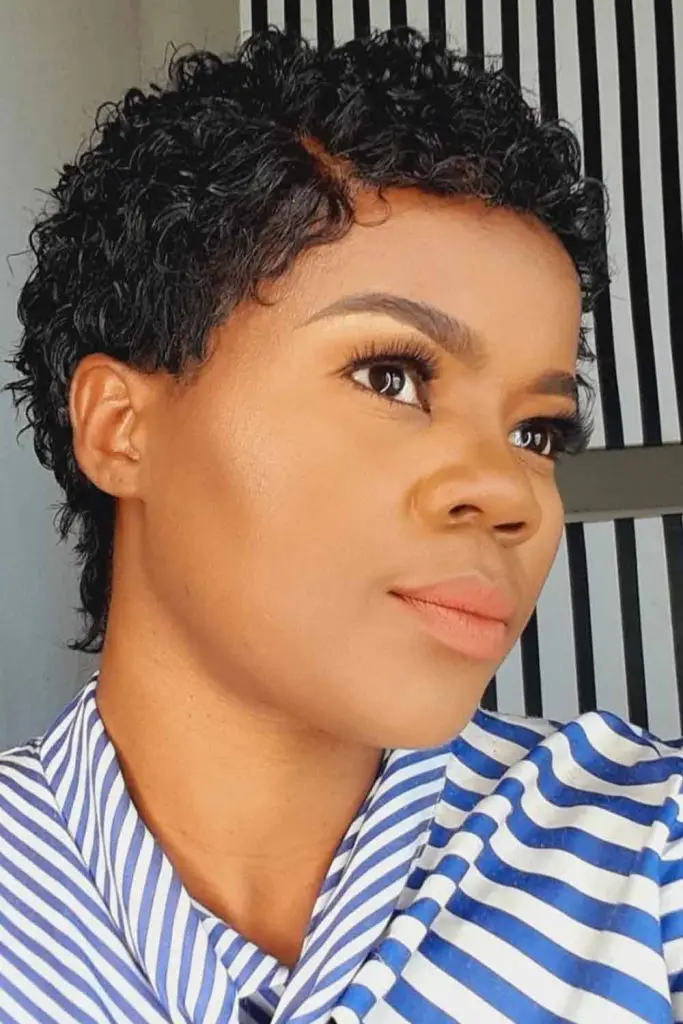
Changing the part can transform a relatively simple haircut.
A deep side part pushes more volume toward one side, creating a slightly asymmetric appearance without requiring an asymmetric haircut.
It can be elegant enough for professional environments while still retaining natural texture.
Best for: Loose-to-medium curls.
9. Wet-Look Curly Pixie
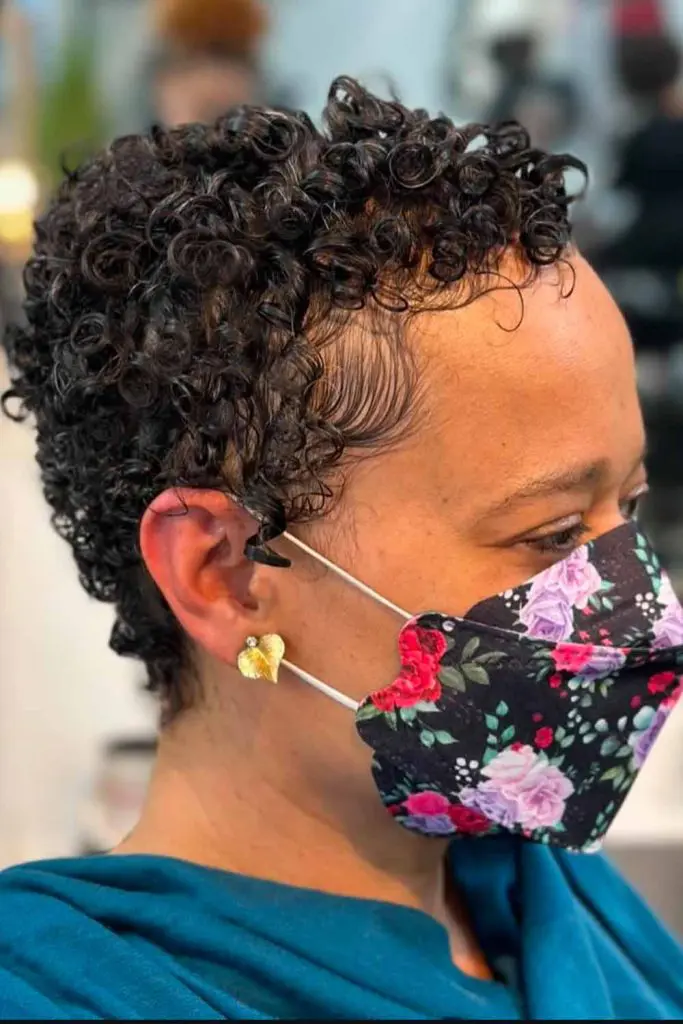
A wet-look finish offers something completely different from soft, fluffy curls.
The hair is defined close to the head using gel or another styling product, producing a glossy editorial appearance.
This isn’t necessarily an everyday hairstyle, but it can work beautifully for evenings and occasions.
Styling caution: Start with less product than you think you need. You can always add more.
10. Curly Pixie With Tapered Sides
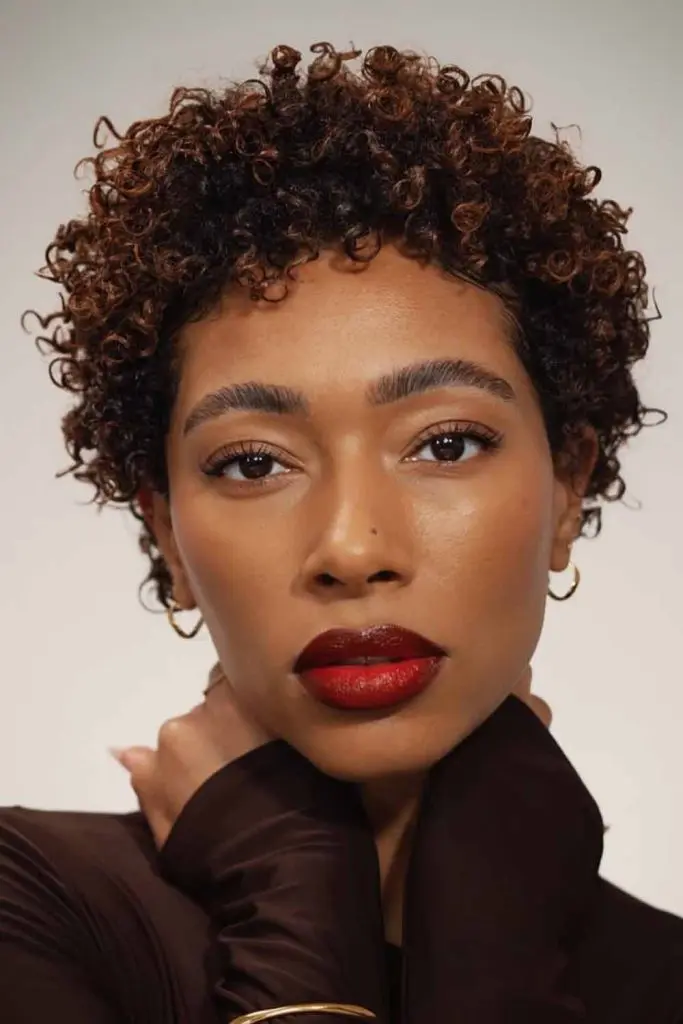
Keeping the sides particularly neat allows the crown to become the centre of attention.
Unlike an undercut, the transition remains gradual.
This can make thick curls easier to manage while maintaining enough length to experiment with different styles on top.
Best for: Medium, thick and dense curly hair.
11. Asymmetrical Curly Pixie
An asymmetrical pixie intentionally keeps one side or the front section longer.
Curly texture makes the difference in length feel softer and more organic than it might on completely straight hair.
It’s an excellent choice when you want something noticeably different from a conventional short haircut.
Best for: Women looking for a more contemporary, statement-making style.
12. Curly Pixie With Long Top
Not ready to cut everything extremely short?
Keep the crown and front significantly longer while shortening the sides and back.
You retain plenty of curl definition and styling flexibility while still achieving the silhouette of a pixie.
This is also one of the easier versions to grow out later.
13. Soft Feminine Curly Pixie
Pixies don’t have to be sharp or edgy.
Soft edges, gentle layering and loosely defined curls create a romantic interpretation of the haircut.
Rather than dramatic contrast between the top and sides, everything blends naturally together.
Best for: Loose curls and women who prefer understated hairstyles.
14. Pixie With Curly Micro Fringe
A very short curly fringe adds personality to a cropped haircut.
Small curls or coils sit around the upper forehead while the remainder of the pixie follows a tapered shape.
Because the fringe is so short, its position should be considered carefully before cutting.
Remember that curly hair can appear considerably shorter after drying.
15. Curly Pixie With Undercut
An undercut creates much stronger contrast than a conventional taper.
Sections underneath or around the sides are cut extremely short while curls remain longer above them.
The result is modern and bold.
However, undercuts require more frequent maintenance if you want the contrast to remain sharp.
Best for: Thick hair and anyone comfortable with frequent salon visits.
16. Grown-Out Curly Pixie
A pixie doesn’t have to look freshly cropped.
Allowing a pixie to grow slightly produces a softer hairstyle somewhere between a conventional pixie and a very short bob.
The additional length provides more styling options and may require fewer salon appointments.
Best for: Anyone wanting a lower-commitment version of short hair.
17. Messy Textured Curly Pixie
Some curly hair looks best when it isn’t overly controlled.
A textured pixie deliberately embraces variation in curl direction, volume and definition.
The objective is not actual messiness but an effortless appearance.
A small amount of lightweight styling product can separate curls without making them stiff.
18. Curly Pixie With Shaved Sides
For maximum contrast, curls can be concentrated through the centre and crown while the sides are clipped considerably shorter.
This is one of the boldest options in our list.
The shorter sections expose the face and ears while the curls provide height and movement.
Maintenance: Expect frequent trimming if you want the sides to remain very short.
19. Blonde Curly Pixie
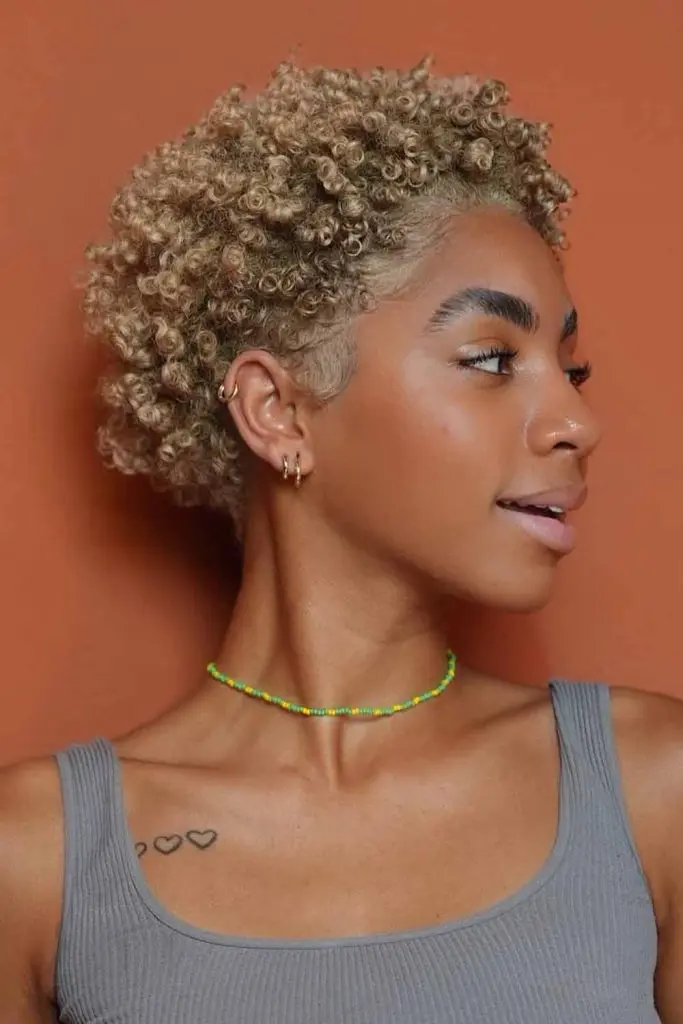
Colour can completely alter the appearance of a pixie.
Blonde shades can highlight individual curls and make the texture more visible because light reflects differently across the bends in the hair.
However, lightening curly hair requires appropriate conditioning because chemical processing can contribute to dryness.
If you’re considering a significant colour change, discuss hair condition with your stylist before bleaching.
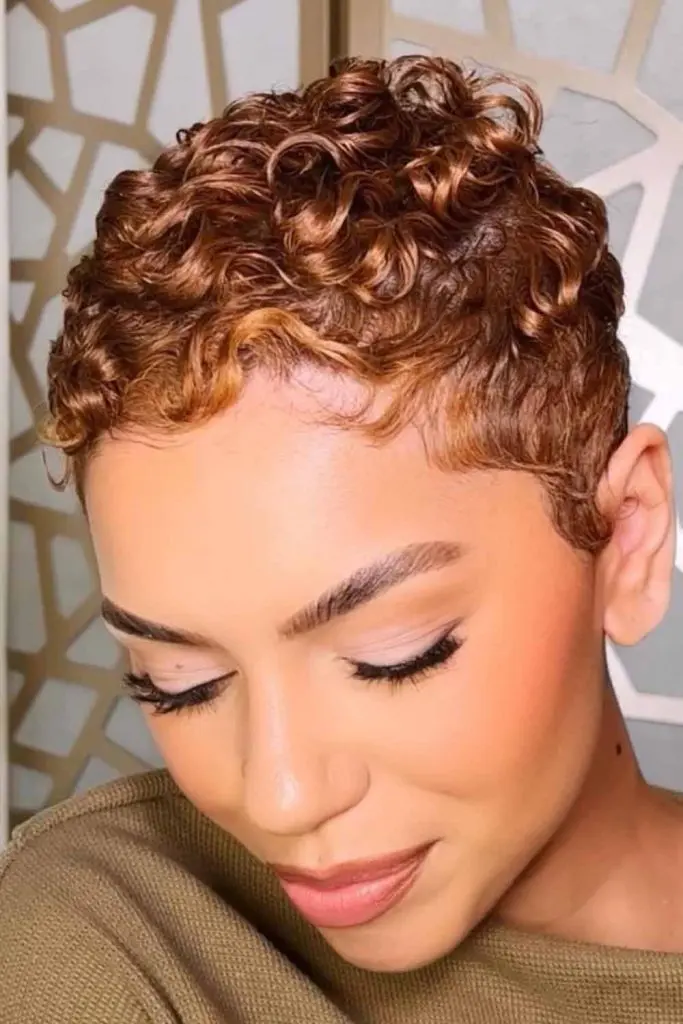
20. Auburn or Copper Curly Pixie
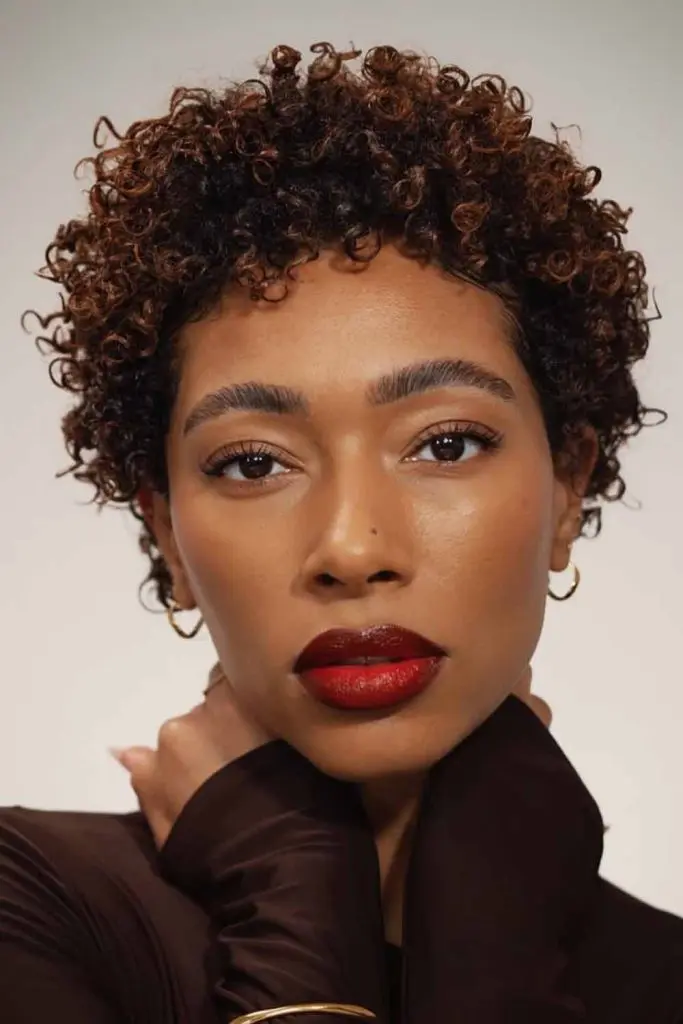
Warm copper and auburn shades work particularly well when you want curl definition to stand out.
The colour catches light across different sections of the curl, creating natural-looking dimension.
This can work on everything from a soft grown-out pixie to a sharply tapered version.
21. Silver and Grey Curly Pixie


Natural grey and silver hair can look exceptional in a pixie.
Rather than hiding grey, a carefully shaped short haircut can turn it into a defining feature.
The combination of silver variation and curly texture creates natural dimension.
This is particularly popular among women who want to transition away from regular colouring.
Supporting guide to link here: Short Curly Pixie Hairstyles for Women Over 50.
22. Curly Pixie for Fine Hair
Fine curly hair requires a slightly different approach.
Removing too much hair can reduce visible density, so the aim is often to retain fullness through strategic layering rather than aggressively thinning the cut.
Lightweight styling products are also important because heavy creams can flatten fine curls.
Supporting guide: Curly Pixie Hairstyles for Fine Hair.
23. Curly Pixie for Thick Hair
Thick curly hair provides plenty of material for creating a strong pixie silhouette.
The challenge is controlling bulk.
Layers, tapering and carefully removing weight can prevent the haircut from becoming too wide while preserving volume where you actually want it.
Supporting guide: Short Curly Pixie Hairstyles for Thick Hair.
24. Curly Pixie With Finger Waves
Finger waves bring vintage influence to a short haircut.
Rather than encouraging maximum curl volume, sections are sculpted into smooth S-shaped waves close to the head.
The result can feel glamorous and highly polished.
It works particularly well for formal events when you want your everyday pixie to look noticeably different.
25. Front-Lifted Curly Pixie
Our final idea directs volume upward and slightly backwards from the forehead.
This exposes more of the face while creating height at the front.
It can be especially useful when your curls naturally fall forward but you’d occasionally like a more open style.
A diffuser and light root-lifting product can help create the shape.
Quick Comparison: Which Curly Pixie Should You Choose?
| If you want… | Consider… |
|---|---|
| Low everyday styling | Ultra-short natural pixie |
| More volume | High-top or layered pixie |
| A softer appearance | Tousled or grown-out pixie |
| Strong definition | Tapered curly pixie |
| Something bold | Undercut or shaved-side pixie |
| Face framing | Side-swept curly fringe |
| Fine-hair volume | Soft layered pixie |
| Less bulk in thick hair | Tapered or undercut pixie |
| Vintage styling | Finger-wave pixie |
| Maximum versatility | Long-top curly pixie |
Choosing a Curly Pixie for Your Face Shape
Face shape shouldn’t be treated as a rigid rule.
If you love a particular haircut, you don’t need permission from a face-shape chart to wear it.
However, understanding proportions can help you decide where you would like volume, length or softness to sit.
Round face
A pixie with additional height through the crown can visually elongate the face.
Consider:
- high-top pixies;
- front-lifted styles;
- asymmetric fringes;
- short sides with fuller curls above.
If that is the effect you’re after, avoid concentrating all the volume directly around the widest part of the cheeks.
Oval face
Oval faces generally work with a wide range of pixie shapes.
You can experiment with short crops, bangs, high-volume crowns or asymmetric styles depending on your hair texture.
Square face
Soft curls can contrast beautifully with a stronger jawline.
Consider leaving some movement around the forehead and temples rather than making every edge extremely geometric.
Tousled bangs and layered pixies are good starting points.
Heart-shaped face
Heart-shaped faces tend to be wider around the forehead and narrower through the chin.
Side-swept curls, soft fringes and moderate crown volume can create balance.
Long or oblong face
If you don’t want to emphasise facial length further, you may prefer volume through the sides rather than creating a very tall crown.
A curly fringe can also visually shorten the forehead.
Diamond face
A pixie can highlight cheekbones particularly well.
Soft curls around the forehead combined with controlled sides can complement the naturally angular proportions associated with a diamond face.
Curly Pixie Face-Shape Guide
| Face shape | Pixie ideas to try | Styling objective |
|---|---|---|
| Round | High top, asymmetric, tapered | Add vertical height |
| Oval | Most pixie variations | Maintain natural balance |
| Square | Tousled, layered, curly fringe | Introduce softness |
| Heart | Side fringe, soft curls | Balance forehead/chin |
| Long | Fringe, fuller sides | Avoid excessive vertical height |
| Diamond | Soft crown, side-swept curls | Complement cheekbones |
These are guidelines rather than rules. Hair density, curl pattern and personal preference matter just as much.
Choosing a Pixie According to Curl Type
Wavy hair
Type 2 or naturally wavy hair can work particularly well with longer pixies.
Because the pattern isn’t as tightly curled, retaining enough length allows the wave to form properly.
Try:
- tousled pixies;
- long-top pixies;
- side-parted styles;
- grown-out pixies.
Curly hair
Defined Type 3-style curls provide plenty of movement.
Layering becomes particularly important because poor weight distribution can alter the overall silhouette.
Try:
- layered pixies;
- tapered pixies;
- curly fringes;
- voluminous crowns.
Coily hair
Tight coils can produce extremely defined short shapes.
Tapered sides, high tops and ultra-short pixies all work particularly well.
Moisture and gentle handling remain important even though the hair is short.
Fine Hair vs Thick Hair: What Changes?
One of the biggest mistakes when choosing a reference photograph is focusing only on curl pattern.
Hair density matters too.
A haircut photographed on extremely thick hair may not produce the same silhouette on fine hair, even if both people have similar curls.
Fine curly hair
The priority is usually preserving visible fullness.
Consider:
- fewer aggressive layers;
- lightweight mousse or foam;
- moderate crown length;
- avoiding heavy styling creams.
Thick curly hair
The priority may instead be controlling bulk and distributing volume.
Consider:
- strategic layering;
- tapered sides;
- removing internal weight;
- undercuts where appropriate;
- stronger-hold products when necessary.
This is why showing your stylist a photograph should start a conversation rather than serve as an exact instruction.
How to Style a Short Curly Pixie at Home


A good haircut should do much of the work for you.
Your routine doesn’t need ten products.
Step 1: Start with damp hair
Curly hair is usually easier to shape while damp.
You don’t necessarily need soaking-wet hair unless that works best for your curl pattern.
Step 2: Apply a small amount of styling product
Choose according to what your hair needs:
Curl cream: softness and definition
Mousse/foam: lightweight volume
Gel: stronger definition and hold
Leave-in conditioner: additional moisture
Short hair requires surprisingly little product.
Start small.
Step 3: Distribute it gently
Use your fingers to work product through the curls.
Pay particular attention to the crown and front because these areas contribute most to the final silhouette.
Step 4: Define selected curls
You don’t need to finger-coil your entire head.
Twisting a few prominent curls around the fringe or crown can make the overall style look more intentional.
Step 5: Air-dry or diffuse
Air drying is simple, while a diffuser can encourage volume and speed up drying.
If diffusing, avoid continually touching the curls while they’re drying.
Step 6: Finish the shape
Once completely dry, gently separate or lift curls where needed.
A tiny amount of lightweight serum can add shine, but avoid saturating the hair.
7 Easy Ways to Change Your Pixie Without Another Haircut
One advantage of leaving some length through the crown is that the same haircut can produce several looks.
Try:
- moving your part from one side to the other;
- bringing curls forward as a fringe;
- lifting the front away from your forehead;
- defining curls for a polished finish;
- separating curls for additional volume;
- smoothing the hair into a wet-look style;
- adding a small decorative hair accessory.
This is where short hair accessories can become particularly useful.
Hair Accessories for Short Curly Hair
You don’t need long hair to use accessories.
The key is choosing accessories that are appropriately sized for the amount of hair being held.
For a short curly pixie or a pixie that is growing out, consider:
- small claw clips;
- mini clips;
- decorative barrettes;
- hair pins;
- small side combs where sufficient length is available.
A small clip can hold back a growing fringe or secure curls away from one side of the face without overwhelming the hairstyle.
Marrie product opportunity
This is the appropriate place for a soft commercial link, rather than inserting product promotions throughout the article.
For example:
Growing out your pixie or looking for an easy way to pin back longer curls? Explore the Marrie Hair Accessories collection, including hair claw clips, side combs and everyday styling accessories.
Internal link: Hair Accessories category.
For this pillar, I would not push large claw clips aggressively because they aren’t naturally suited to a very short pixie. Product recommendations should remain genuinely relevant.
How to Maintain a Short Curly Pixie
Short hair is often described as low-maintenance.
A better description is low daily maintenance but potentially higher haircut maintenance.
You may spend less time styling it every morning, but the shape becomes noticeable as soon as the hair starts growing.
Schedule regular trims
Many pixies benefit from reshaping approximately every 4–8 weeks, although the ideal interval depends on the cut and how comfortable you are with a grown-out appearance.
An undercut or very tight taper may require attention sooner.
A soft, longer pixie can often grow for longer without appearing untidy.
Keep curly hair moisturised
Short hair can still become dry.
Use conditioner appropriate for your texture and introduce leave-in moisture when necessary.
Avoid excessive product buildup
Because there is less hair, using the same quantity of styling product you previously used on long hair can quickly overwhelm a pixie.
Protect your curls overnight
A satin or silk-style pillowcase or bonnet can help reduce friction and preserve curl definition.
Refresh rather than completely restyle
On non-wash days, lightly dampening selected areas may be enough to reactivate your styling product.
Focus on the curls that have lost their shape rather than soaking your entire head every morning.
Curly Pixie Maintenance Schedule
| When | What to do |
|---|---|
| Daily/as needed | Refresh flattened curls |
| Wash days | Cleanse, condition and redefine |
| Weekly/as needed | Monitor moisture and buildup |
| Every 4–8 weeks | Consider reshaping/trimming |
| Before colouring | Assess condition and dryness |
| Every salon visit | Discuss how the previous cut grew out |
What to Remember Before Your Next Pixie Haircut
This is particularly important if you’re about to go short for the first time.
1. Bring several reference photographs
Don’t bring just one.
Find examples showing:
- the front;
- the sides;
- the back;
- a similar curl pattern;
- ideally, similar hair density.
Explain what you like about each photograph.
2. Discuss shrinkage
Curly hair can become significantly shorter as it dries.
Your stylist should take this into consideration before removing too much length.
3. Talk about your actual routine
Tell your stylist whether you’re willing to spend 20 minutes styling your hair every morning or would prefer something closer to five.
That information can influence the haircut.
4. Explain what you dislike about your current hair
This can sometimes be more useful than saying what you want.
Perhaps you dislike volume around the sides, curls falling into your eyes or excessive weight through the crown.
5. Decide how frequently you’re prepared to visit the salon
A highly structured taper might look fantastic but may require more maintenance than a soft pixie.
Choose a haircut that fits your lifestyle as well as your appearance.
6. Don’t ignore your natural growth pattern
Cowlicks, crown direction and hairline patterns influence how extremely short hair sits.
Your stylist should work with them.
Questions to Ask Your Stylist
Before committing to the cut, consider asking:
- How short will my curls look once completely dry?
- Will this style work with my natural curl pattern?
- Where should we keep additional length?
- How often will the haircut need reshaping?
- What will it look like as it grows?
- Which styling product would suit this particular cut?
- Can I style it without heat?
- Will my current hair colour affect the result?
- Would a taper or softer sides work better for my density?
A consultation should be collaborative.
Common Curly Pixie Mistakes to Avoid
Choosing a haircut based only on face shape
Face shape is useful, but texture, density and lifestyle are equally important.
Using too much product
More product doesn’t automatically mean more definition.
On short hair, excess product can quickly flatten curls.
Cutting the fringe too short while wet
Always account for shrinkage.
Trying to force every curl into place
Curly pixies often look better when they retain natural variation.
Ignoring the grow-out stage
Ask what the haircut will look like six or eight weeks later, particularly if you don’t plan frequent salon visits.
Comparing your hair with a completely different texture
Use inspiration photographs realistically.
A style can be adapted, but the exact result will vary.
How to Grow Out a Curly Pixie Gracefully
Eventually, you may decide you want more length.
The awkward stage doesn’t have to be quite as awkward as its reputation suggests.
Instead of simply stopping haircuts altogether, ask your stylist to reshape rather than shorten.
The objective changes from maintaining a pixie to creating a gradual transition toward a longer style.
You can:
- keep the nape tidy while the crown grows;
- gradually grow the sides;
- use small accessories to control longer front sections;
- experiment with side parts;
- embrace the grown-out pixie as a hairstyle itself.
Eventually, the haircut may transition toward a short curly bob.
Curly Pixie vs Curly Bob: Which Short Hairstyle Is Right for You?
Short Curly Pixie vs Curly Bob
If you’re unsure whether to go as short as a pixie, a curly bob provides an alternative.
| Feature | Curly Pixie | Curly Bob |
|---|---|---|
| Length | Very short | Usually jaw/chin area or longer |
| Daily drying | Generally faster | Longer |
| Salon shaping | Often more frequent | Usually less frequent |
| Styling versatility | Texture-focused | More tying/pinning options |
| Dramatic change | High | Moderate |
| Grow-out | Requires reshaping | Usually straightforward |
| Hair accessories | Mostly smaller accessories | Wider selection |
Neither is universally better.
Choose according to how short you genuinely want to go and how you prefer to style your hair.
FAQs
1. Are pixie cuts good for naturally curly hair?
Yes. Naturally curly hair can work extremely well in a pixie because the texture creates built-in movement and volume. The haircut should be designed around your curl pattern, density and shrinkage.
2. Is a curly pixie difficult to maintain?
Daily styling can be relatively simple, but maintaining a defined short shape may require regular trims. Softer, longer pixies generally tolerate growth better than tight tapers or undercuts.
3. How often should a curly pixie be trimmed?
Many women find somewhere around four to eight weeks suitable, although this varies considerably according to haircut, growth rate and personal preference.
4. Can fine curly hair have a pixie cut?
Absolutely. Fine curly hair can look fuller when appropriately shaped. Avoid removing unnecessary density and favour lightweight styling products.
5. Are curly pixies suitable for thick hair?
Yes. Thick hair can create beautiful volume, although strategic layering or tapering may be required to control bulk.
6. Which face shape looks best with a curly pixie?
There isn’t one ideal face shape. The haircut can be adapted by changing crown height, fringe length, side volume and overall silhouette.
7. Can women over 50 wear curly pixie hairstyles?
Certainly. Pixies can work at any age, and curly texture can provide softness, volume and movement. Natural grey and silver curls can also look particularly striking when shaped into a pixie.
Internal link: Short Curly Pixie Hairstyles for Women Over 50.
8. What products should I use on a curly pixie?
That depends on your texture and desired finish. Curl cream provides softness, mousse can add lightweight volume and gel can offer stronger definition. Short hair generally requires only a small amount.
9. Can I style a curly pixie without heat?
Yes. Many curly pixies can be air-dried successfully. A diffuser is optional when you want faster drying or additional volume.
10. How do I stop a curly pixie becoming frizzy?
Maintain adequate moisture, minimise unnecessary friction, avoid repeatedly touching curls while they dry and choose styling products suited to your texture.
11. Can I wear hair clips with a pixie cut?
Yes, provided there is enough length for the accessory to grip. Small claw clips, barrettes and pins are generally more practical than oversized clips on very short hair.
12. Is a pixie cut suitable if I eventually want long hair again?
Yes, but growing it out takes patience. Periodic reshaping can help the haircut transition through longer stages without simply becoming uneven.
Build Your Curly Pixie Routine Around Your Hair
The most successful short curly pixie hairstyles aren’t necessarily the most dramatic ones on Pinterest or Instagram.
They’re the cuts that work with the person wearing them.
A woman with fine loose curls and five minutes to style her hair each morning needs something different from someone with dense coils who enjoys regular salon visits and experimenting with bold shapes.
Start with your natural texture, density and lifestyle.
Then consider face shape, colour and styling preferences.
If this will be your first pixie, a slightly longer tapered or layered version gives you room to learn how your curls behave at a shorter length. If you’ve worn short hair for years, an undercut, high-top shape or asymmetrical fringe can make the next haircut feel completely different.
Most importantly, don’t treat a reference photograph as a template that must be copied exactly.
Use it to communicate an idea.
A skilled stylist can then adapt that idea to your own hair.