
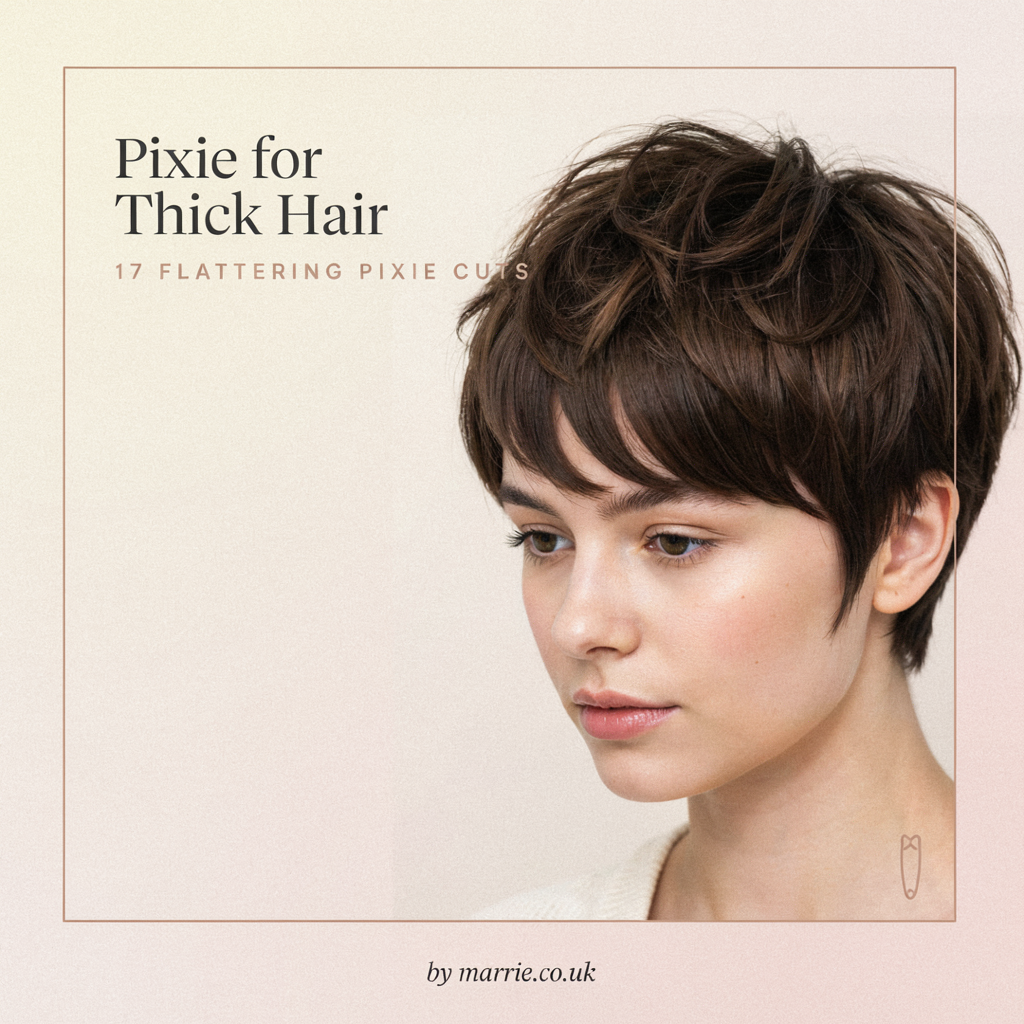
Thick hair can be both a blessing and a challenge. You have plenty of natural volume to work with, but shorter hairstyles can sometimes become bulky, heavy or difficult to shape if the cut isn’t designed around your hair density. That is where a well-cut pixie for thick hair can make a huge difference.
Pixie cuts remove unnecessary weight while allowing your natural texture and volu me to become part of the hairstyle. From soft layered pixies and textured crops to curly tapered cuts and longer side-swept styles, there are plenty of ways to make thick hair work beautifully at a shorter length. The secret isn’t simply cutting thick hair short. It is choosing the right shape, layering and weight distribution for your hair texture, face shape and everyday styling routine.
In this guide, we’ll look at some of the best pixie cuts for thick hair, including styles for straight, wavy and curly textures, plus advice on maintenance, styling and what to ask your hairdresser before your next cut. If you have naturally curly thick hair, you may also want to explore our complete Short Curly Pixie Hairstyles Guide, where we cover curly pixie styles, face shapes, maintenance and styling in greater detail.
Pixie cuts for Thick Hair
Is a Pixie Cut Good for Thick Hair?
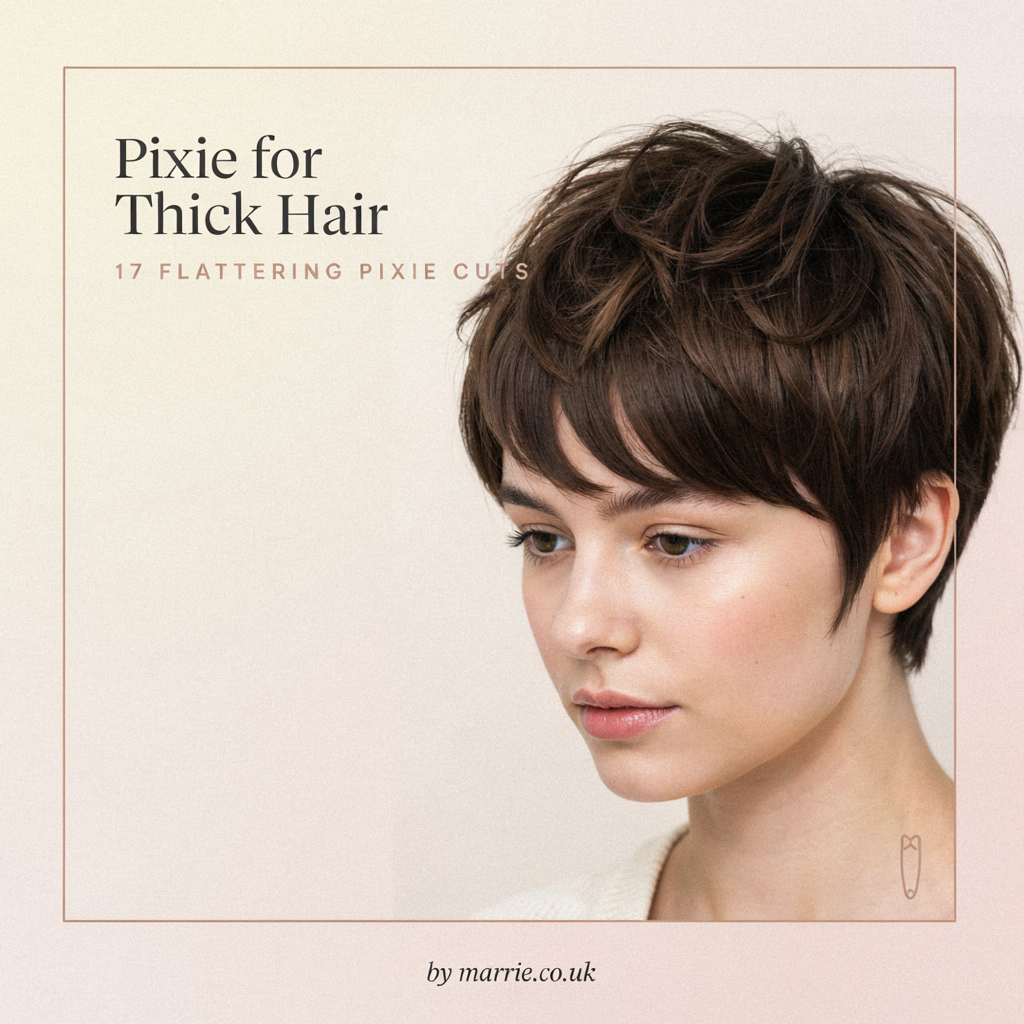
Yes. In fact, thick hair can be particularly well suited to a pixie cut. The natural density provides enough body to create texture, movement and definition without relying heavily on volumising products. However, the haircut needs to be shaped correctly.
A poorly structured short haircut can make very thick hair appear wider or heavier than expected. Strategic layers, tapering, graduation and internal weight removal can help create a much more balanced result.
A good pixie cut for thick hair can:
- Remove excess weight and bulk
- Make everyday styling quicker
- Showcase natural texture
- Create definition around the face
- Reduce the amount of hair that needs washing and drying
- Make thick curls and waves easier to manage
- Provide natural volume at the crown
- Give you plenty of styling possibilities despite the shorter length
The most important part is choosing a stylist who understands short hair and thick-hair texture.
17 Best Pixie Cuts for Thick Hair
1. Layered Pixie for Thick Hair
A layered pixie is one of the safest choices if you have very thick hair.
Rather than cutting everything to one uniform length, layers remove some of the density and encourage the hair to fall more naturally.
Shorter layers around the crown can provide shape while longer pieces around the front soften the overall appearance.
Best for: Thick straight or slightly wavy hair
Styling level: Easy to moderate
Ask your stylist for: Internal layering and controlled weight removal
Avoid excessive thinning if your hair tends to become frizzy. The objective should be to redistribute the weight rather than simply remove as much hair as possible.
2. Textured Pixie Cut
A textured pixie embraces the natural body of thick hair instead of trying to flatten it.
The hair is cut into varying lengths to create separation and movement. A small amount of styling cream, paste or lightweight wax can then help emphasise individual sections.
This works particularly well if you prefer a slightly relaxed, undone hairstyle rather than a perfectly polished finish.
Best for: Thick straight and wavy hair
Face shapes: Oval, heart and round
Look: Modern and effortless
3. Short Curly Pixie for Thick Hair
Thick curly hair can look fantastic in a short pixie because the density gives curls plenty of definition and personality.
Keeping slightly more length on top gives your curls room to form while shorter sides prevent the overall hairstyle from becoming too bulky.
The exact length should depend on your curl pattern because tightly coiled hair will behave very differently from loose curls.
For considerably more curly inspiration, see our Short Curly Pixie Hairstyles pillar guide.
Best for: Naturally curly thick hair
Styling tip: Use a lightweight curl cream rather than heavy wax.
4. Tapered Pixie for Thick Hair
The tapered pixie gradually becomes shorter towards the sides and neckline while retaining more length through the crown.
This creates an attractive silhouette and can solve one of the biggest problems with thick short hair: excessive bulk around the sides.
The contrast also gives the hairstyle more definition.
Best for: Thick straight, wavy or curly hair
Maintenance: Approximately every 4–6 weeks
Best feature: Controls side volume
5. Long Pixie for Thick Hair
Not ready for an extremely short haircut?
A long pixie offers an excellent middle ground.
Keeping additional length around the fringe, crown and sides gives you more styling freedom while still removing much of the weight associated with longer thick hair.
You can wear it:
- Swept sideways
- Tousled
- Tucked behind the ears
- Smooth and polished
- Textured and messy
It’s also easier to grow out if you later decide that short hair isn’t for you.
6. Side-Swept Pixie
A longer side-swept fringe can soften a traditional pixie and create movement across the face.
This is particularly useful for thick hair because some of the natural density can be incorporated into the fringe rather than concentrated around the crown.
It can also be flattering if you want a short haircut without exposing the entire forehead.
Best for: Thick straight or wavy hair
Face shapes: Round, square, oval and heart
Styling: Light blow-drying or air-drying depending on texture
7. Pixie with Undercut
For people struggling with exceptionally dense hair, an undercut can remove considerable weight from underneath while leaving the top longer.
This creates a stronger, more contemporary look than a traditional pixie.
It can also make thick hair substantially easier to wash, dry and style.
However, remember that an undercut requires regular maintenance as the shorter areas grow out.
Best for: Very thick hair
Look: Bold and modern
Maintenance: Higher than a longer layered pixie
8. Messy Pixie for Thick Hair
Thick hair provides the perfect foundation for a deliberately tousled pixie.
Rather than trying to keep every strand perfectly controlled, this hairstyle uses natural volume to create texture.
Work a small amount of styling cream through the hair using your fingertips and separate selected pieces rather than coating the entire head with product.
The result should look relaxed rather than overly styled.
9. Pixie with Long Bangs
Long bangs combined with a shorter back and sides create an attractive contrast.
The additional length at the front can be styled in several ways, including:
- Side-swept
- Softly curled
- Textured
- Slicked back
- Slightly lifted
This makes it one of the more versatile pixie hairstyles for women who like changing their look.
10. Wavy Pixie for Thick Hair
Natural waves and thick hair are a strong combination for a pixie.
Instead of straightening the hair, ask your stylist to create a cut that follows your existing wave pattern.
A little extra length on top allows the waves to develop naturally.
Salt sprays are often associated with textured short hair, but they can make some hair types feel dry. A lightweight styling cream or mousse may be a better everyday option.
11. Feathered Pixie
A feathered pixie uses soft layers to reduce the visual heaviness of thick hair.
The ends are shaped to create movement rather than forming a solid block.
It is a particularly useful option if you want something softer than a sharply tapered or undercut pixie.
Best for: Straight to wavy thick hair
Finish: Soft and feminine
Good choice for: People transitioning from medium-length hair
12. Pixie Bob for Thick Hair
A pixie bob — sometimes called a bixie — sits somewhere between a traditional pixie and a short bob.
You retain more length around the sides and back while still benefiting from shorter layers and reduced weight.
For someone nervous about going directly from long hair to a very short pixie, this can be an excellent transition haircut.
It also provides enough length to experiment with clips, pins and other hair accessories.
13. Choppy Pixie Cut
Choppy layers can give dense hair more definition and visual movement.
Rather than appearing heavy and uniform, individual sections become more noticeable.
The effect can range from subtle to quite edgy depending on how dramatically the layers are cut.
This style usually looks best when the texture is intentional rather than overly smooth.
14. Sleek Pixie for Thick Straight Hair
Not every thick-hair pixie needs to be messy or heavily textured.
If your hair is naturally straight, a sleek pixie can create a sophisticated, polished finish.
A defined side part works particularly well.
The key is removing enough internal bulk for the hair to sit close to the head without making the ends appear thin.
Best for: Thick straight hair
Ideal for: Professional or minimalist styling
Styling tip: Use a small amount of smoothing serum through the ends.
15. Voluminous Pixie with Longer Crown
Sometimes the best strategy isn’t fighting thick hair’s volume but putting it exactly where you want it.
Keeping additional length through the crown creates height while tapering the sides keeps the silhouette controlled.
This can help visually lengthen rounder face shapes.
It is also a good option for naturally curly or wavy hair where the crown has plenty of movement.
16. Asymmetrical Pixie
An asymmetrical pixie keeps one section longer than the other, usually around the fringe or one side of the face.
This creates a distinctive shape and gives thick hair somewhere to display its natural body.
Depending on how dramatic the difference is, an asymmetrical pixie can look either subtly contemporary or deliberately edgy.
17. Soft Pixie for Thick Hair Over 50
A pixie can be an excellent choice for mature thick hair because it combines manageable length with plenty of shape.
Instead of an extremely tight crop, consider slightly longer layers around the crown and front.
This can create softness and movement while making good use of naturally thick hair.
Grey, silver and salt-and-pepper hair can also look particularly striking when the haircut has enough texture to display the variation in colour.
Pixie Cuts for Thick Hair by Hair Texture
The best pixie isn’t determined by thickness alone. Texture matters just as much.
| Hair Type | Pixie Styles to Consider | Main Objective |
|---|---|---|
| Thick straight hair | Sleek, layered, side-swept pixie | Remove bulk and create movement |
| Thick wavy hair | Textured, long or messy pixie | Work with natural waves |
| Thick curly hair | Curly tapered or layered pixie | Define curls while controlling volume |
| Thick coily hair | Tapered or shaped pixie | Maintain definition and silhouette |
| Very dense hair | Undercut or heavily structured pixie | Reduce excessive bulk |
Your natural texture should influence how the haircut is shaped.
A photo of a pixie you love can be useful when visiting the salon, but ask your stylist whether that exact cut will behave similarly with your density, curl pattern and growth direction.
Best Pixie for Thick Hair by Face Shape
Your face shape can also help determine where to retain or remove volume.
Round Face
Try additional height through the crown with controlled sides.
Good options include a voluminous pixie, side-swept pixie or asymmetrical pixie.
Oval Face
Oval faces can usually experiment with many pixie variations, including short crops, curly styles, bangs and longer pixies.
Square Face
Soft layers, waves and side-swept fringes can provide contrast against stronger jawlines.
Consider a layered or wavy pixie.
Heart-Shaped Face
Styles with movement around the fringe can balance a wider forehead and narrower chin.
A long pixie or side-swept fringe works particularly well.
Long Face
Avoid creating excessive height at the crown if you don’t want to make the face appear longer.
A softer pixie with volume around the sides may provide better balance.
Remember that these aren’t rules. Face shape is simply one factor alongside hair texture, density, personal style and how much daily maintenance you want.
How to Stop a Thick Pixie from Looking Bulky
This is one of the most important considerations when cutting thick hair short.
Simply shortening everything doesn’t necessarily reduce bulk.
In some cases, cutting thick hair too uniformly can actually make it appear wider.
Instead, your stylist may use a combination of:
Layering: Removes weight while retaining overall length where necessary.
Graduation: Creates controlled shape, particularly around the back.
Tapering: Reduces volume towards the neckline and sides.
Internal weight removal: Removes excess density without dramatically changing the visible exterior length.
Undercutting: Removes a larger amount of hair underneath longer sections.
The correct technique depends heavily on your hair texture.
For example, aggressive thinning can sometimes make curly or frizz-prone hair more difficult to control.
How to Style a Pixie Cut on Thick Hair
One advantage of going short is that styling doesn’t necessarily need to involve a complicated routine.
Step 1: Start with Damp Hair
After washing, gently remove excess water rather than aggressively rubbing the hair with a towel.
For curly or wavy textures, a microfibre towel can help reduce unnecessary friction.
Step 2: Choose a Lightweight Product
The exact product depends on the finish you want.
You might use:
- Curl cream for defined curls
- Lightweight mousse for volume
- Styling cream for flexible control
- Texture paste for separation
- Smoothing serum for sleek styles
Start with less product than you think you need.
You can always add more.
Step 3: Work With Your Natural Direction
Trying to force thick hair in the opposite direction from its natural growth can make daily styling harder.
Use your fingers to establish the shape.
Step 4: Air-Dry or Diffuse
Curly and wavy pixies can often be air-dried or gently diffused.
Straight styles may benefit from a quick blow-dry to establish direction.
Step 5: Finish Selectively
Instead of adding styling product everywhere, apply a tiny amount to specific areas that need definition or control.
Maintaining a Pixie Cut with Thick Hair
A pixie requires less hair to manage each morning, but the haircut itself generally requires more frequent maintenance than longer hairstyles.
As a rough guide, many pixie cuts benefit from reshaping approximately every 4–8 weeks, depending on how short and structured the style is and how quickly your hair grows.
Tightly tapered pixies and undercuts generally show regrowth sooner.
Long pixies can often tolerate more growth.
Between appointments:
- Keep the scalp clean without over-washing.
- Condition according to your texture and dryness.
- Avoid continually applying heavy waxes.
- Protect curly hair from unnecessary friction overnight.
- Clarify occasionally if styling products begin building up.
- Don’t attempt aggressive DIY thinning between appointments.
Most importantly, pay attention to shape rather than simply length.
If your pixie starts feeling unusually wide or difficult to style, it may be the internal weight that needs adjusting.
What to Ask Your Hairdresser Before Getting a Pixie
Walking into a salon and simply asking for “a pixie cut” leaves a lot open to interpretation.
Bring two or three reference photos and discuss:
- How short you want the sides and back.
- How much length you want to retain on top.
- Whether you want your ears exposed or partially covered.
- How your natural hair behaves when air-dried.
- Whether you normally wear your hair straight, curly or natural.
- How often you’re willing to return for trims.
- Whether you want bangs or a longer fringe.
- Whether your priority is reducing bulk or retaining volume.
- Any cowlicks or difficult growth patterns you already know about.
Also explain your normal morning routine.
There’s little point choosing a pixie that requires 25 minutes of styling if your objective is to get ready in five.
Things to Remember Before Your Next Pixie Haircut
Once you’ve lived with a pixie for several weeks, you’ll understand your hair much better.
Before your next appointment, think about what worked and what didn’t.
Was the crown too heavy?
Did the sides become bulky quickly?
Did you wish you’d kept the fringe longer?
Was the nape difficult to maintain?
Did your curls become easier or harder to define?
Take photos of your haircut at different stages between appointments.
Your stylist can use these to understand how the haircut grows out, which can be more useful than only seeing how it looks immediately after being cut.
Growing Out a Pixie with Thick Hair
Eventually, you may decide to grow your pixie longer.
Thick hair can actually be advantageous during this process because you already have plenty of density.
The challenge is maintaining a deliberate shape while different sections grow at different speeds.
Instead of stopping salon visits completely, ask for reshaping appointments.
Your stylist may trim around the neckline while allowing the crown and sides to gain length.
A typical progression might look like:
Short pixie → long pixie → bixie → short bob → bob
Hair accessories can become particularly useful once the front and side sections are long enough to pin back.
Hair Accessories for Growing-Out Pixie Cuts
Very short pixies don’t normally need much in the way of accessories, but once your hairstyle begins growing, small accessories can become surprisingly useful.
Depending on your hair length, you can experiment with:
- Small hair clips
- Bobby pins
- Mini claw clips
- Headbands
- Decorative slides
- Side combs
They can help control growing fringes and awkward side sections while also making the transition feel like a new hairstyle rather than simply an overgrown pixie.
This is also where the article can naturally connect with relevant Marrie hair accessories without turning an informational hairstyle guide into a sales page.
Pixie for Thick Hair FAQs
1. Is a pixie cut suitable for very thick hair?
Yes. Thick hair can provide excellent natural volume for a pixie, but proper layering and weight removal are important to prevent excessive bulk.
2. What is the best pixie cut for thick hair?
There isn’t one universal best style. Layered, tapered, textured and long pixies are particularly versatile choices because they allow the stylist to control density while maintaining shape.
3. Will a pixie make thick hair look even thicker?
It can if the hair is cut too uniformly. Strategic layering, tapering and internal weight removal can make thick hair appear much more controlled.
4. Can you have a pixie cut with thick curly hair?
Absolutely. Leaving sufficient length for the curl pattern to form while tapering heavier areas can create a beautifully defined curly pixie.
Explore more examples in our Short Curly Pixie Hairstyles Guide.
5. Is a pixie good for thick frizzy hair?
It can be, although the cut should account for how the hair behaves naturally. Avoid choosing a style based exclusively on how it looks when professionally blow-dried.
6. How often should thick pixie hair be trimmed?
Many pixie cuts are reshaped roughly every 4–8 weeks. Very short tapered styles may require more frequent appointments, while longer pixies can often go longer between trims.
7. Does thick hair need thinning for a pixie cut?
Sometimes, but “thinning” shouldn’t automatically mean aggressive use of thinning shears. A stylist may instead use layering, point cutting or other weight-removal techniques depending on your texture.
8. What pixie cut suits a round face with thick hair?
A pixie with controlled sides and additional height or movement through the top can complement a round face. Side-swept and asymmetrical styles are also worth considering.
9. Can older women with thick hair wear pixie cuts?
Yes. Soft layered pixies can work particularly well with thick mature hair, including natural grey and silver textures.
10. Is a long pixie easier to maintain than a short pixie?
Usually, a longer pixie gives you more flexibility as it grows and may require less frequent reshaping than a very short taper or undercut.
Final Thoughts: Is a Pixie Right for Your Thick Hair?
Thick hair shouldn’t stop you from considering a pixie. In many cases, your natural density is exactly what gives the haircut its volume, movement and character.
The important decision isn’t simply whether to cut your hair short.
It’s deciding where you want to keep the volume and where you want to remove it.
If you’re trying a pixie for the first time, a longer layered or tapered version can be a sensible starting point. You’ll retain some styling flexibility while discovering how your thick hair behaves at a shorter length.
And if your thick hair is naturally curly, continue with our main Short Curly Pixie Hairstyles: The Ultimate Guide for more hairstyle ideas, maintenance advice and styling inspiration.