
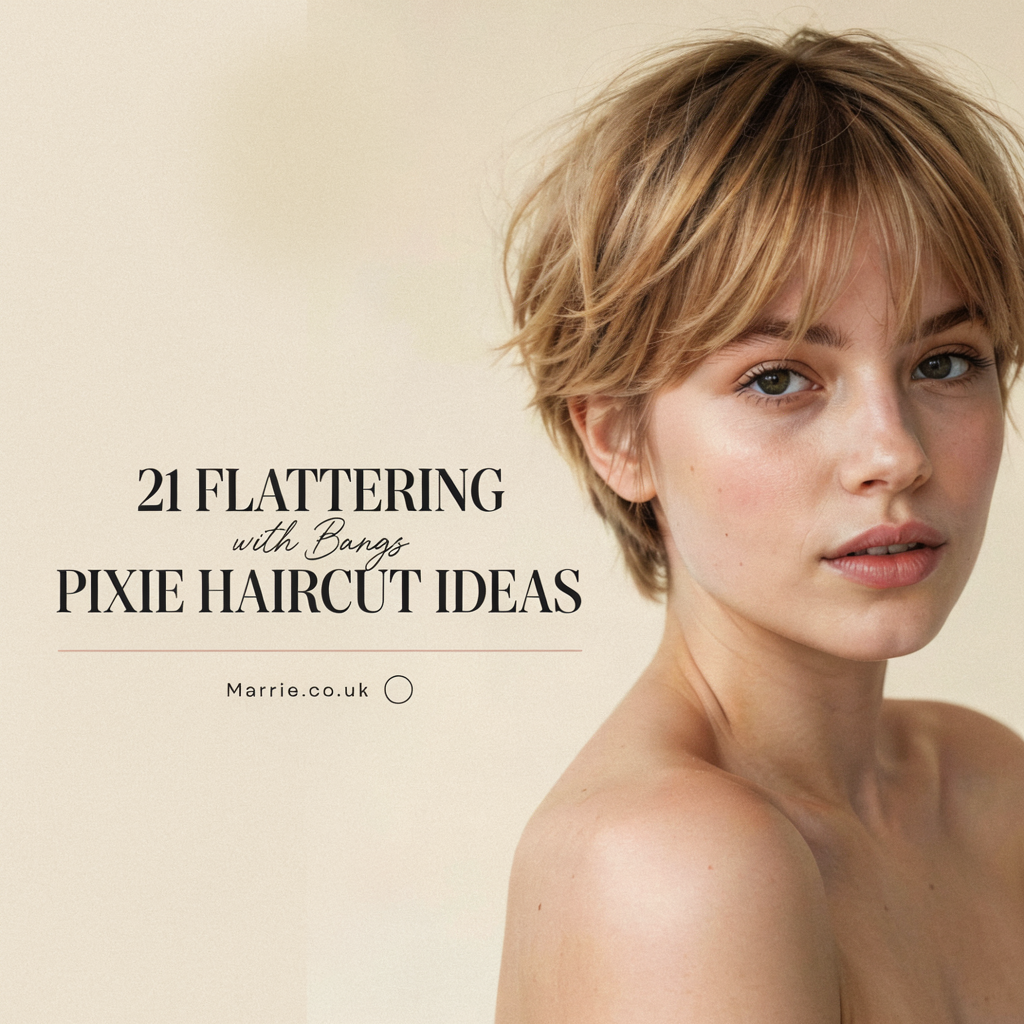
A pixie with bangs combines the freedom of a short haircut with enough length around the front to frame the face, soften the overall shape and give you more styling options.
While a traditional pixie can expose much of the forehead, adding bangs completely changes the character of the cut. They can be wispy and delicate, long and side-swept, curly and textured, or short and bold.
That flexibility is one reason pixie haircuts with bangs work across so many hair types and face shapes.
If you’re particularly interested in curls and natural texture, start with our complete Short Curly Pixie Hairstyles guide and use this article to explore which type of bangs could work with your pixie.
Pixie with Bangs
Why Choose a Pixie Cut with Bangs?
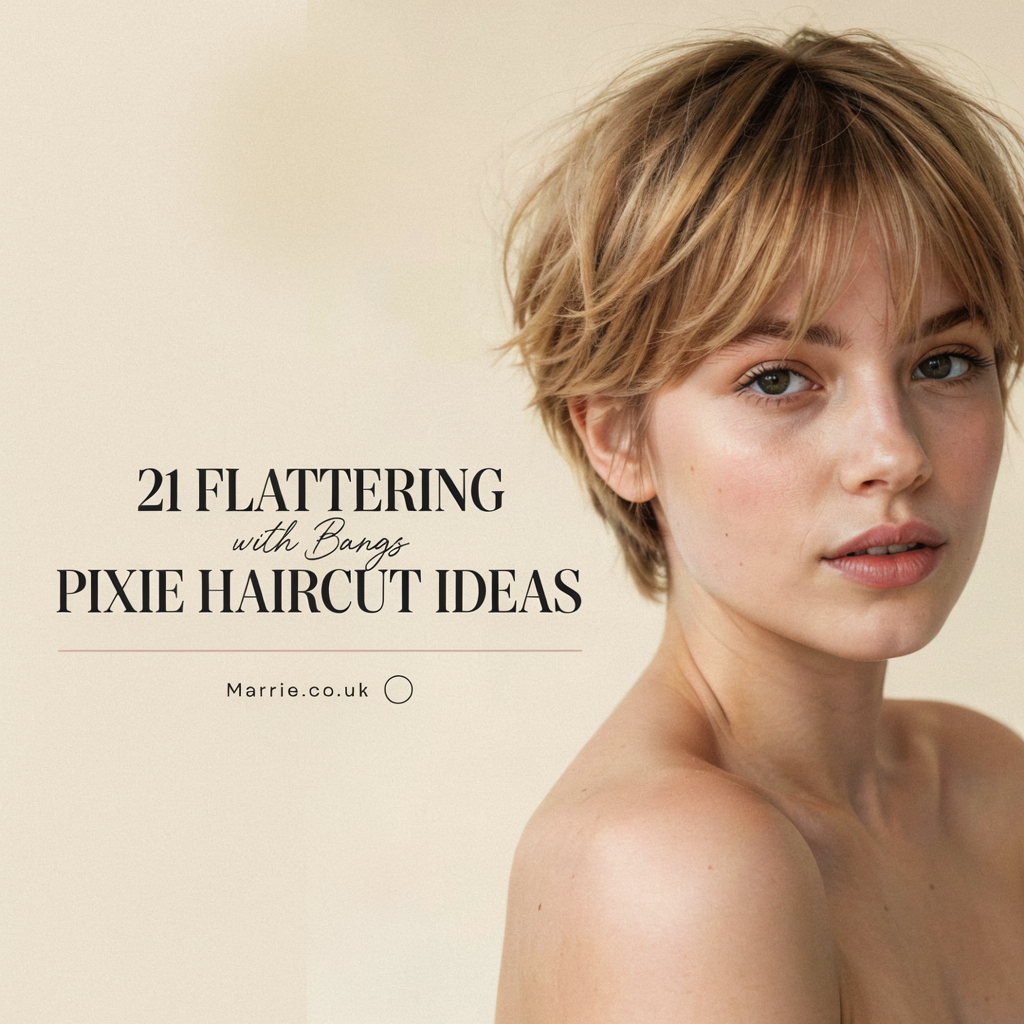
Bangs do much more than simply cover part of the forehead.
On a pixie haircut, the front section can help determine the entire character of the style. Changing the length, direction or texture of your bangs can make the same basic pixie appear soft, edgy, sophisticated or playful.
A pixie with bangs can:
- Add softness around the face
- Highlight the eyes
- Give a short haircut more movement
- Provide additional styling options
- Balance different face shapes
- Work with straight, wavy, curly or coily textures
- Make the transition to very short hair feel less dramatic
- Allow you to retain some length at the front
The challenge is choosing bangs that work with your natural hair texture and the proportions of your haircut rather than selecting them solely from a photograph.
21 Pixie with Bangs Ideas
1. Classic Pixie with Side-Swept Bangs
One of the most wearable combinations is a classic pixie with a longer fringe swept gently to one side.
The sides and back remain relatively short while the additional length at the front creates softness.
It’s a good option if you’re trying a pixie for the first time and don’t want an extremely cropped appearance.
Best for: Straight, fine or softly wavy hair
Good for: Oval, round and heart-shaped faces
2. Curly Pixie with Bangs
Curly bangs can make a pixie feel relaxed and full of personality.
Rather than straightening the front section, let a few curls fall naturally towards the forehead.
The stylist needs to account for shrinkage when determining the length, particularly with tighter curl patterns.
Best for: Naturally curly hair
Styling tip: Apply curl cream while damp and avoid repeatedly touching the curls while they dry.
3. Pixie with Long Bangs
A pixie with long bangs gives you considerably more styling freedom than an ultra-short cut.
You can sweep the fringe sideways, tuck it away, add texture or style it forward.
The contrast between a shorter back and longer front can also create a strong modern silhouette.
Best for: Straight, wavy and loose curly hair
4. Short Pixie with Wispy Bangs
Wispy bangs provide softness without creating a heavy fringe.
Small, lightly textured sections fall across the forehead while the rest of the haircut stays short and neat.
This works particularly well if you have fine hair and don’t want to sacrifice too much density to create full bangs.
Best for: Fine to medium hair
5. Pixie with Curtain Bangs
Curtain bangs aren’t limited to long hairstyles.
On a longer pixie, the front can be parted and directed gently to either side of the face.
The result sits somewhere between a traditional fringe and face-framing layers.
Best for: Longer pixies and grown-out pixie cuts
6. Pixie with Choppy Bangs
For something less polished, consider deliberately choppy bangs.
Different lengths through the fringe create texture and give the haircut an edgier appearance.
A small amount of styling paste can separate individual pieces, but avoid applying too much product.
Best for: Straight and slightly wavy hair
7. Pixie with Micro Bangs
Micro bangs sit noticeably above the eyebrows and make a stronger statement than softer fringe styles.
Combined with a cropped pixie, they create a sharp, contemporary finish.
This is a more committed look, so discuss the finished fringe length carefully with your stylist before cutting.
Best for: Those wanting a bold short hairstyle
8. Wavy Pixie with Bangs
Natural waves can produce beautifully relaxed bangs.
Instead of trying to make the fringe perfectly straight, allow the natural bends in the hair to become part of the style.
Keeping a little extra length helps the wave pattern develop.
Best for: Naturally wavy hair
9. Pixie with Side Bangs for Fine Hair
Fine hair can benefit from a side-swept fringe because the hair is directed across the forehead rather than divided into a thick, blunt bang.
Strategic layering through the crown can create additional lift.
However, too many layers may reduce the visual density of already-fine hair.
For more advice, see our dedicated Pixie for Fine Hair guide.
10. Textured Pixie with Messy Bangs
A textured pixie doesn’t need every strand to sit perfectly.
Loose, irregular bangs combined with movement through the crown create an intentionally relaxed appearance.
This is particularly effective when your hair naturally has some wave or texture.
Best for: Wavy and medium-density hair
11. Tapered Pixie with Curly Bangs
A tapered pixie creates a neat shape around the sides and nape while leaving enough length through the crown and front for curls to form.
That contrast makes the curly fringe more noticeable.
Best for: Curly and coily hair
12. Pixie with Full Bangs
Full bangs create a stronger frame across the forehead than wispy or side-swept styles.
Because a substantial amount of hair needs to be allocated to the fringe, this version generally works more easily with medium to thick hair.
Best for: Medium or thick hair
13. Pixie with Feathered Bangs
Feathering creates movement by allowing the fringe to fall in light sections rather than one solid line.
Combined with layered sides and crown, it produces a softer interpretation of the pixie.
Best for: Fine to medium hair
14. Pixie with Bangs for Thick Hair
Thick hair gives you plenty of material for creating a substantial fringe, but controlling bulk becomes important.
Your stylist may use careful internal layering to prevent the bangs from becoming too heavy while preserving their shape.
The rest of the haircut can also be tapered or layered to distribute volume.
Read our Pixie for Thick Hair guide if density is one of your main considerations.
15. Pixie with Asymmetrical Bangs
An asymmetrical fringe is longer on one side and gradually becomes shorter across the forehead.
It can turn an otherwise simple pixie into something much more distinctive.
Best for: Straight or slightly wavy hair
Style: Modern and statement-making
16. Silver Pixie with Side-Swept Bangs
Natural grey and silver hair can look particularly striking in a short, structured cut.
A soft side fringe provides movement while allowing the natural variations in silver, grey and white hair to remain visible.
This can be a sophisticated option for women embracing their natural colour.
17. Pixie with Bangs for Women Over 50
A pixie with bangs can be adapted beautifully at any age.
Soft bangs can frame the face, while layers through the crown can help create movement and shape.
Rather than choosing a haircut because it’s considered “age appropriate,” focus on your hair density, texture, face shape and preferred maintenance level.
We’ve covered this subject more fully in our guide to Pixie Hairstyles for Women Over 50.
18. Tousled Pixie with Long Fringe
Keep the fringe longer and allow it to blend into textured layers across the crown.
The result is less structured than a classic pixie and works especially well when you prefer hairstyles that don’t look overly styled.
A small amount of mousse or styling cream can help enhance the movement.
19. Sleek Pixie with Side Bangs
Not every pixie needs lots of texture.
A smooth pixie with a defined side fringe can create a clean, polished appearance.
This version can work particularly well for straight hair or hair that is easily styled smooth.
20. Coily Pixie with Short Bangs
Coily hair can create its own distinctive interpretation of bangs.
Instead of attempting to produce a straight fringe, the front can be shaped so the natural coils sit slightly forward.
Keeping the sides shorter creates definition around the silhouette.
Best for: Coily and tightly curled hair
21. Grown-Out Pixie with Bangs
That awkward stage between a pixie and a bob doesn’t have to look awkward.
As your pixie grows, the longer front sections can become intentional bangs or face-framing pieces.
Regular shaping around the back and sides can help the haircut retain structure while the top and fringe gain length.
Which Pixie Bangs Suit Your Face Shape?
Face shape shouldn’t be treated as a strict rulebook. However, the placement of a fringe can change the visual proportions of a haircut.
| Face Shape | Bangs to Consider | Effect |
|---|---|---|
| Round | Long side-swept or asymmetrical | Adds diagonal movement |
| Oval | Most fringe styles | Offers considerable flexibility |
| Square | Wispy, textured or side-swept | Can soften strong angles |
| Heart | Curtain or side-swept | Can balance a broader forehead |
| Long | Fuller or forward fringe | Can reduce the appearance of vertical length |
| Diamond | Soft side fringe | Helps frame cheekbones |
Use this as a starting point rather than a restriction. Hair texture and density can matter just as much as face shape.
Pixie with Bangs for Fine Hair
When hair is fine, the objective is usually to create movement without removing too much density.
A wispy or side-swept fringe can work particularly well because it doesn’t require a large section of hair.
Consider:
- Keeping layering controlled
- Creating subtle root lift
- Using lightweight mousse
- Avoiding heavy oils and waxes
- Keeping the fringe slightly longer if you want flexibility
Very thick, blunt bangs may take too much hair away from the crown on some fine-haired pixies.
Pixie with Bangs for Thick Hair
Thick hair gives you more options, but it introduces a different problem: bulk.
A heavy fringe combined with dense sides can overwhelm the shape of a pixie.
Your stylist may therefore remove weight internally or combine a fuller fringe with tapered sides.
Long, textured and side-swept bangs are all worth considering.
Curly Pixie with Bangs
Curly bangs deserve special attention because they behave differently from straight fringes.
The biggest consideration is shrinkage.
A curl that appears long when wet can sit considerably higher once completely dry. Cutting curly bangs too short while wet can therefore produce a much shorter result than intended.
Whenever possible, discuss your natural curl pattern with a stylist experienced in textured hair.
You can explore many more curly variations in our main Short Curly Pixie Hairstyles guide.
How to Style a Pixie with Bangs
The styling method depends heavily on the type of fringe.
For Side-Swept Bangs
Apply a small amount of lightweight styling product and direct the fringe sideways while drying.
Avoid making it completely rigid. A little natural movement usually creates a softer finish.
For Curly Bangs
Apply curl cream or gel while the hair is damp.
Gently encourage individual curls into position and allow them to air-dry or use a diffuser.
Avoid repeatedly brushing the fringe once the curl pattern has formed.
For Wispy Bangs
Use minimal product.
The objective is light separation rather than heavy definition.
For Textured or Choppy Bangs
Once the hair is dry, use a tiny amount of styling paste between your fingertips to separate selected sections.
Don’t coat the entire fringe.
How to Maintain a Pixie with Bangs
A pixie with bangs usually needs slightly more attention than a pixie without a fringe because the front becomes noticeable as soon as it grows.
A simple routine can help.
Trim regularly. Depending on your haircut and growth rate, reshaping approximately every 4–8 weeks may help maintain the silhouette.
Don’t over-wash unnecessarily. Choose a routine based on your scalp and hair type.
Keep curls hydrated. Curly bangs can become frizzy when they lack moisture.
Use heat carefully. If you regularly straighten or blow-dry the fringe, use appropriate heat protection.
Watch product buildup. Bangs sit against the forehead, so excessive oils or styling products can quickly make them look heavy.
What to Ask Your Hairstylist
Instead of saying only, “I’d like a pixie with bangs,” explain what you actually want from the haircut.
Discuss:
- How much forehead you want visible
- Whether you prefer full or wispy bangs
- Your normal hair parting
- Whether you wear your hair naturally curly or straight
- How much time you spend styling
- How short you’re comfortable going around the ears
- Whether you want to tuck the fringe behind your ear
- How frequently you’re prepared to have trims
Bring several reference photographs rather than relying on one.
Ideally, choose examples showing people with a similar hair texture and density to yours.
Before Getting Bangs with Your Pixie
There are a few practical things worth considering.
Bangs Grow Quickly
Because they sit prominently around your face, even a small amount of growth can change how they behave.
Your Natural Parting Matters
Strong cowlicks or growth patterns around the hairline can affect how easily a fringe sits forward.
Think About Your Morning Routine
Some bangs need almost no styling. Others may need wetting, blow-drying or reshaping every morning.
Consider Your Hair Texture
Don’t choose a fringe that requires you to fight your natural texture every day unless you’re comfortable with that commitment.
Start Longer if You’re Unsure
You can always shorten bangs later.
Putting the hair back after it has been cut is considerably more difficult.
Hair Accessories for a Pixie with Bangs
One advantage of keeping length through the front is that small hair accessories can become useful.
When you’re growing your bangs out or simply want your forehead clear, small clips can hold the fringe to one side.
For a very short pixie, choose accessories proportionate to the amount of hair available. Large claw clips intended for long or thick hair generally aren’t appropriate.
Small clips, pins and compact accessories are more practical for controlling short sections.
This gives Marrie a natural connection between hairstyle inspiration and the Hair Accessories collection without turning the article into a sales page.
Pixie with Bangs vs Pixie Without Bangs
| Pixie with Bangs | Pixie Without Bangs |
|---|---|
| More face-framing options | More open forehead |
| Can soften the overall haircut | Often looks more cropped |
| More styling versatility | Often quicker to style |
| Fringe may require extra maintenance | Fewer front sections to maintain |
| Useful when transitioning to short hair | Creates a bolder short-hair effect |
| Many variations available | Simpler overall silhouette |
Neither option is universally better. The decision comes down to your preferred appearance, texture and maintenance routine.
Frequently Asked Questions About Pixie Haircuts with Bangs
Does a pixie look good with bangs?
Yes. Bangs can add softness, texture and styling flexibility to a pixie. The key is choosing a fringe that complements your hair texture, density and overall haircut.
What bangs look best with a pixie cut?
Side-swept, wispy, curly, choppy and longer bangs are all popular options. There isn’t one best style for everyone.
Can you have a curly pixie with bangs?
Yes. Curly bangs can work beautifully with a pixie. Leave enough length for the natural curl pattern and account for shrinkage before cutting.
Are pixie cuts with bangs good for fine hair?
They can be. Wispy and side-swept bangs often work particularly well because they don’t require as much hair as a heavy full fringe.
Can thick hair have a pixie with bangs?
Yes. Thick hair offers plenty of density for bangs, although careful layering may be needed to control excessive bulk.
Is a pixie with bangs suitable for women over 50?
Yes. Pixies with bangs can be worn at any age. Hair texture, density, face shape and personal preference are more useful considerations than age alone.
How often should pixie bangs be trimmed?
It depends on the length and style. Short, precise bangs may require attention sooner than a long side fringe. The overall pixie often benefits from reshaping roughly every 4–8 weeks.
What face shape suits a pixie with bangs?
Pixies with bangs can be adapted to most face shapes. Changing the length, direction and fullness of the fringe allows the haircut to be customised.
Are long bangs easier to maintain with a pixie?
They can be more forgiving because they can often be swept sideways or tucked away as they grow. Very short bangs usually show growth more quickly.
Can I grow out a pixie with bangs?
Yes. The fringe can gradually become side-swept bangs and eventually face-framing layers while the rest of the pixie grows towards a longer crop or bob.
Final Thoughts
A pixie with bangs gives you something a very short crop doesn’t always provide: flexibility around the face.
You can keep the fringe long and sweeping, embrace natural curls, choose soft wispy bangs or make the haircut more distinctive with a short or asymmetrical fringe.
Rather than choosing bangs purely because they look good in a photograph, consider your hair texture, density, natural growth pattern, face shape and daily routine.
Those factors will determine whether your new fringe still works when you’re styling it yourself several weeks after leaving the salon.
For more inspiration, continue to our complete Short Curly Pixie Hairstyles: The Ultimate Guide, which acts as the main hub for Marrie’s growing Pixie Hairstyles collection.